Tasmania's AI data centre boom, mapped and sourced

Tasmania has three AI data centres under construction, approved or proposed, one newly approved small facility, and six more the government keeps confidential.COM-02COM-03COM-09GRD-07 Run at full continuous load, together they would draw an estimated 78% to 94% of the electricity the whole state used in 2024-25.GRD-02GRD-06GRD-07

As of 24 September 2026. Figures change — see Method and sources.

17days left to make a submission

The Tasmanian Government is consulting on a draft Statement of Expectations for data centre and AI infrastructure developers, covering renewable energy, network costs, water use and community engagement.COM-05 You can read the draft and have your say directly.

Have your say on the draft (opens in a new tab)

Opens the Tasmanian Government's consultation site.

At a glance

  • Power. Every disclosed and confidential proposal at full load would draw an estimated 78% to 94% of the electricity Tasmania used in 2024-25.GRD-02GRD-06GRD-07 The grid
  • Water. The only water figures are the companies' own: 8.7 million litres a year claimed at Bell Bay, with no independent audit found.ENV-21 Water
  • Diesel. Bell Bay has 276 approved backup generators; Wesley Vale proposes 400,000 litres of diesel on site.ENV-13ENV-14ENV-19 Diesel and bushfire risk
  • The case for. Government and industry make arguments for data centres in Tasmania, each set out with an evidence check. The case for
  • Your say. Submissions on the draft Statement of Expectations close 12 October 2026.COM-05 Have your say

The sites

This is every data centre in Tasmania that could be found: three AI data centres moving through construction or approvalCOM-09, six more the government keeps confidentialCOM-02COM-03, one newly approved small facility, and a further seven computer rooms that already operate — mostly older facilities, and no commissioning date could be found for several of them.LOC-01LOC-02LOC-04LOC-05LOC-12LOC-17 Every row below carries its own sources.

Scenic view of the Tamar River estuary near Beauty Point, Tasmania, the same estuary as Bell Bay; not a photo of the industrial site.

Map of Tasmania showing data centre sites by status: operating, under construction, approved, proposed and confidential. The full list is in the table below.

Operating. Seven data centres already run in Tasmania — colocation halls, university computing, a state utility's own systems. None publish a power figure.LOC-01LOC-02LOC-04LOC-05LOC-12LOC-17

Under construction. One AI data centre is being built: Firmus Technologies' St Leonards site near Launceston, approved for up to 90 MW of construction capacity.LOC-10LOC-11GRD-06

Approved. Two more have approval: Firmus's 288 MW site at Bell Bay, and a small 1 MW data centre in Burnie.COM-13GRD-07

Proposed. One is still waiting on a decision: Firmus's Wesley Vale site, up to 52 MW, with no connection to the town water supply.LOC-08COM-16

Confidential. Six more proposals exist. The government won't name the companies, or confirm the real scale — at least 500 MW by one account, up to 705 MW by another.COM-02COM-03

Closer in: Hobart. Five of the seven operating data centres found are in greater Hobart.LOC-01LOC-02LOC-05LOC-17

Map notes and sources

Locations shown are approximate. Four of the six confidential proposals have no published location. Map: Natural Earth (public domain); place coordinates © OpenStreetMap contributors, ODbL.

Data centres in Tasmania by status, with capacity, water use and sources
NameOperatorLocationStatusCapacityWaterSources
Project Southgate — St LeonardsFirmus TechnologiesSt Leonards, Launceston Under construction90 MW approved (construction) / 104 MW contracted (energy supply) — two different measures3.3 million L/yr company claimGRD-06GRD-08COM-09COM-16STY-11ENV-01ENV-21LOC-10LOC-11
Project Southgate — Bell BayFirmus TechnologiesLong Reach, Bell Bay (George Town) Approved288 MW8.7 million L/yr company claimENV-13ENV-14COM-13COM-14COM-23GRD-06ENV-01ENV-21LOC-09
Project Southgate — Wesley ValeFirmus TechnologiesWesley Vale (Latrobe Council) Proposed52 MW grid connection / 46 MW IT load0.7 million L/yr company claim; no town water connection; rainwater harvesting, with water trucked in during extreme dry periodsENV-01ENV-02ENV-21COM-16COM-22LOC-08LOC-19
Six confidential proposals (aggregate)Undisclosed — government declined to name proponentsUndisclosed (one flagged North-West Tasmania, one at the former Liberty Bell Bay site, George Town) Confidential500–705 MW combined contestedunknownGRD-06GRD-07COM-02COM-03
Viridis Green Data CentreViridis Green Data Centres LimitedBurnie CBD Approved~1 MW company claimNo water-cooling plant; free-air coolingGRD-06GRD-07ENV-12LOC-07
42-24 Cambridge Data Centre42-24 (TasNetworks subsidiary)Cambridge, Hobart (Clarence) OperatingunknownClosed-loop cooling; no constant water supply needed company claimLOC-01LOC-13LOC-14LOC-15
42-24 Derwent Park Data Centre42-24 (TasNetworks subsidiary)Derwent Park, Glenorchy OperatingunknownClosed-loop cooling; no constant water supply needed company claimLOC-01LOC-14LOC-15
TasmaNet DC3 (formerly DXN “TAS01”)Now owned by DADT; formerly DXN; built by TasmaNetDowsing Point, Glenorchy Operatingunknown MW; 30 racks, room for 100unknownLOC-02LOC-03LOC-20
PIPE Networks Hobart Data CentrePIPE Networks (part of TPG Telecom)Hobart CBD OperatingunknownunknownLOC-17
TasNetworks internal Data CentreTasNetworksTasmania (exact site unknown) OperatingunknownunknownLOC-04
University of Tasmania HPC facilityUniversity of TasmaniaSandy Bay campus, Hobart Operatingunknown (original cluster destroyed in the 2018 Hobart flood; replacement unconfirmed)unknownLOC-05LOC-06LOC-23
Tasmanian ColoTasmanian ColoLaunceston OperatingunknownunknownLOC-12
What the status icons mean
  • Operating
  • Under construction
  • Approved
  • Proposed
  • Confidential

Two of the figures in this table need extra context. See “The transparency gap” further down this page.

For the full detail, including operator and location, please view this table on a tablet or laptop.

The grid

Tasmania makes almost all its power from hydro and wind, and trades the rest with the mainland.GRD-02 Basslink is the only electricity cable to the mainland; Marinus Link is not yet running.GRD-17GRD-46 Phone and internet use separate cables.GRD-46GRD-47 Data centres would add another large, concentrated load to a grid that already carries several: Bell Bay Aluminium alone draws 355 MW.GRD-08

Interior of the Basslink converter station at George Town, showing large electrical equipment and cabling.
Basslink converter station, George Town, March 2017

Tasmania's power: supply vs use

2024-25, GWh. Data-centre additions shown at full load all year (worst case). Supply here is broken into five sources rather than one bar.

Electricity, GWh a year

Supply 11,213 GWh
Use 11,213 GWh
Use + Firmus 444 MW 15,102 GWh
Use + all proposals, 945–1,150 MW 19,491–21,287 GWh
  • Hydro 6,343 GWh
  • Wind 1,838 GWh
  • Gas 288 GWh
  • Rooftop solar exports 235 GWh
  • Basslink imports 2,509 GWh
  • Tasmanian consumption 10,671 GWh
  • Basslink exports 542 GWh
  • Firmus 444 MW 3,889 GWh
  • To 945 MW: Viridis + confidential 500 MW 4,389 GWh
  • Range to 1,150 MW 1,796 GWh

This chart has one starting point: Tasmania's own use, 10,671 GWh, plus what it exported to the mainland, 542 GWh. Together that totals 11,213 GWh, everything Tasmania generated and used in 2024-25.GRD-02

945 MW adds Firmus's three sites (444 MW), Viridis Burnie (1 MW), and 500 MW, the lower of two published totals for six confidential proposals. The other report says up to 705 MW instead. This is the low end of the published range, not a minimum. A stricter number exists: Firmus's other disclosed site total, 430 MW, brings the low end down to 931 MW. That total is calculated here. No report publishes it as a total.GRD-06GRD-07ENV-16

Data table
SegmentGWh
Hydro6,343
Wind1,838
Gas288
Rooftop solar exports235
Basslink imports2,509
Supply total11,213
Tasmanian consumption10,671
Basslink exports542
Use total11,213
Firmus 444 MW, full load3,889
Viridis 1 MW + six confidential proposals, 500 MW4,389
Range to 705 MW confidential1,796

Source: Tasmanian Economic Regulator; ABC News; The ExaminerGRD-02GRD-06GRD-07GRD-08

Firmus figure: this page uses 444 MW, the three sites added together. Firmus has also asked Hydro Tasmania for 450 MW, a separate request for the same sites.GRD-06GRD-08

What Marinus Link would add to the mainland link

Interconnector capacity, megawatts

Interconnector capacity, MW

  • Basslink500 MW
  • Basslink, 4-hour overload630 MW
  • Marinus Link (planned)1,500 MW

Source: Australian Energy Regulator; Marinus Link Pty LtdGRD-15GRD-17GRD-18GRD-20

Marinus Link is two 750 MW cables. Stage 1 is targeted for about 2030. Stage 2, which makes up the rest of the 1,500 MW shown here, appears only in AEMO's Government Schemes scenario, dated December 2034, and is not committed.GRD-17GRD-70

Hydro storage, 2003–2025

Percentage of storage capacity full at 30 June each year

Water stored in hydro lakes, % full

Some years have more than one published figure for 30 June, from the regulator and Hydro Tasmania, the government-owned operator. The differences are small, 0.1 to 0.8 points, and unexplained. The chart shows the first published figure; the table lists every reading found.

Data table
30 June% fullSource
2001unknown
2002unknown
200330.5GRD-30
200438.2GRD-30
200522.7GRD-31
200630.5GRD-33
200719.3GRD-33
200819.1GRD-33
200927.7GRD-34
201036.3GRD-35
201145.9GRD-36
201253.6 (53.8 in a later report)GRD-85GRD-37
201332.8 (33.6 in a later report)GRD-37GRD-38
201428.0 (28.1 in a later report)GRD-37GRD-87
201529.7 (29.6 in a later report)GRD-38GRD-40
201628.5 (29.1 in a later report)GRD-38GRD-40
201734.9 (34.8 in a later report)GRD-38GRD-40
201839.6 (39.2 in a later report)GRD-39GRD-40
201934.7GRD-40
202040.0 (40.1 in a later report)GRD-87GRD-01
202136.2GRD-01
202233.9 (33.8 in a later report)GRD-88GRD-01
202340.4 (40.5 in a later report)GRD-88GRD-01
202431.5GRD-01
202533.0GRD-02
2 May 201612.77GRD-05
Minimum 30% at 30 June (post-crisis)30GRD-05

Source: Hydro Tasmania annual reports; Tasmanian Economic RegulatorGRD-01GRD-02GRD-05GRD-30GRD-31GRD-33GRD-34GRD-35GRD-36GRD-37GRD-38GRD-39GRD-40

Tasmania used 10,671 gigawatt-hours of electricity in 2024-25 — almost all of it hydro and wind, topped up by imports down the Basslink cable.GRD-02

Bell Bay Aluminium is currently Tasmania's largest single power user, at 355 MW. Firmus's three sites, at 444 MW combined, would overtake it.GRD-08GRD-06

If every known and confidential proposal proceeded at once, at full continuous load, it would draw an estimated 78% to 94% of the electricity Tasmania used in 2024-25.GRD-02GRD-06GRD-07

Basslink carries 500 MW to and from Victoria. Marinus Link's first 750 MW cable is targeted for about 2030; a second, which would take the link to 1,500 MW, is not committed.GRD-15GRD-17GRD-70

Storage levels move with the weather. They fell to 12.77% during the 2015-16 energy crisis, when the Basslink cable itself failed for six months.GRD-05

Power supply is not guaranteed

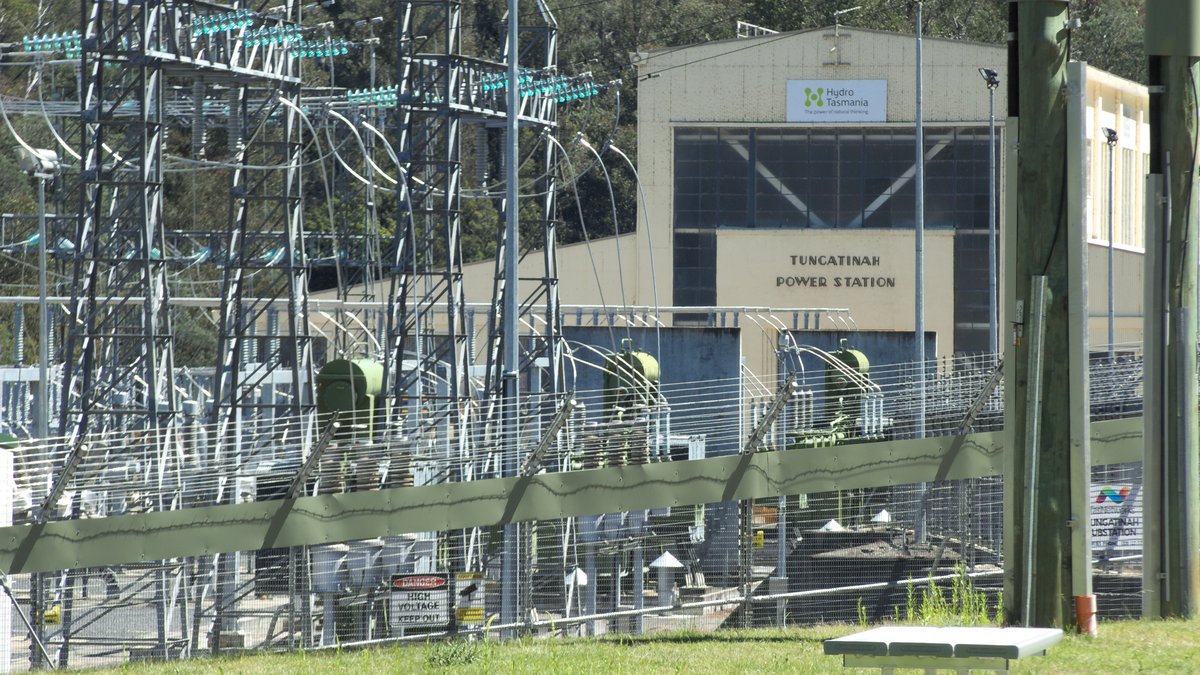
Tungatinah Power Station, a Hydro Tasmania station, caught fire on 2–3 September 2026. It was Tasmania's fifth-largest hydro station, about 142 MW, supplying about 5% of the state's power. The building was destroyed and will be demolished; no one was on site, and about 300 households lost power.GRD-43GRD-44GRD-45

Tasmania Fire Service ruled the fire accidental, starting on the assembly bay floor; the ignition source was under investigation as of 10 September. No restart timeline has been given.GRD-45 Hydro Tasmania switched on the gas-fired Tamar Valley Power Station and said the state had enough capacity. A station can go offline without warning; other stations, gas and imports can cover the gap.GRD-44

Tungatinah Power Station building, photographed in 2017, before the fire that destroyed it in September 2026. Historical photo, not a current image of the site.

Demand is flat. New loads are not.

Tasmania used less electricity in 2024-25 than in 2020-21, and less each year since the 2021-22 peak.GRD-02 AEMO's 2026 outlook says most growth in Tasmania will come from new industries, including data centres. AEMO expects about 300 MW of committed and anticipated new generation capacity over its forecast horizon, with a further 800 MW of government-supported projects identified.GRD-70 Those are figures for capacity to supply power; the data-centre megawatts on this page are load, the power a site would draw.

Tasmania's own use is falling while the proposed loads are more than three times the committed new capacity AEMO expects.

Use in gigawatt-hours a year; capacity and load in megawatts

Electricity use, GWh a year

  • 2020-2110,747 GWh
  • 2021-2211,225 GWh
  • 2022-2311,082 GWh
  • 2023-2410,935 GWh
  • 2024-2510,671 GWh

Change per year, 2020-21 to 2024-25: −0.18%.GRD-02

New capacity vs new load, MW

New capacity AEMO expects 300–1,100 MW
Proposed data-centre load 945–1,150 MW
  • Committed and anticipated 300 MW
  • Government-supported +800 MW
  • Firmus + Viridis 445 MW
  • Confidential 500–705 MW

Capacity is nameplate. Wind and solar rarely run at full output. The data-centre bars assume full load all year. AEMO's figures cover its whole forecast horizon, not one year.GRD-70GRD-06COM-02COM-03

945 MW adds Firmus's three sites (444 MW), Viridis Burnie (1 MW), and 500 MW, the lower of two published totals for six confidential proposals. The other report says up to 705 MW instead. This is the low end of the published range, not a minimum. A stricter number exists: Firmus's other disclosed site total, 430 MW, brings the low end down to 931 MW. That total is calculated here. No report publishes it as a total.GRD-06GRD-07ENV-16

Source: Tasmanian Economic Regulator; AEMO 2026 Electricity Statement of Opportunities; ABC News; The ExaminerGRD-02GRD-70GRD-06COM-02COM-03

At full continuous load, the proposed data centres — 945 to 1,150 MW, the upper figure using the higher of two disputed confidential-proposal totals — would draw 8,278 to 10,074 gigawatt-hours a year, or 131% to 159% of the 6,343 gigawatt-hours Tasmania's hydro system generated in 2024-25.GRD-02GRD-06GRD-07COM-02COM-03ENV-16

Is Tasmania still generating more than it uses?

Generated and used in Tasmania, GWh a year

The gap between the two lines is Basslink: Tasmania imports the difference when 'used' is higher, and exports it when 'generated' is higher. It generated more than it used through most of the 2010s, then generated less every year from 2022-23 on. The hollow dots on 2011-12 to 2013-14 mark a lower 'used' figure from an earlier regulator report: the later figures make generation plus imports equal consumption plus exports exactly, and the earlier ones don't — evidence of a different demand definition, not an open dispute.

Data table
YearGeneratedUsedSource
2011-1210,39310,617 (9,919 earlier)GRD-05
2012-1312,78610,622 (9,793 earlier)GRD-05
2013-1413,81410,720 (9,795 earlier)GRD-05
2014-159,08310,513GRD-05
2015-169,86310,487GRD-05
2016-1710,25810,622GRD-79
2017-1811,17010,961GRD-79
2018-1911,34910,843GRD-79
2019-2011,19210,683GRD-79
2020-2110,15710,747GRD-80
2021-2211,47211,225GRD-80
2022-2310,19211,082GRD-81
2023-249,68610,935GRD-01
2024-258,70410,671GRD-02

Source: Tasmanian Economic Regulator, Energy in Tasmania reportsGRD-05GRD-79GRD-80GRD-81GRD-01GRD-02

Power from the mainland

Tasmania imported more electricity than it exported in six of the last ten financial years, including each of the last three: net imports of 891, then 1,249, then 1,967 gigawatt-hours.GRD-05GRD-69GRD-02 Mainland power is pooled with Victoria's grid, 55.8% coal-fired in 2024 — no single import traces to one plant or fuel source.GRD-02GRD-68 Counting gas and oil with the coal, 59.4% of Victoria's generation that year was fossil-fuelled — again, no single import traces to one plant or fuel source.GRD-68

Basslink: how much power Tasmania brought in, year by year

Net position each financial year, gigawatt-hours. Different colours mark import years and export years.

Basslink net position, GWh a year

  • 2015-16624 GWh in
  • 2016-17365 GWh in
  • 2017-18209 GWh out
  • 2018-19505 GWh out
  • 2019-20509 GWh out
  • 2020-21590 GWh in
  • 2021-22247 GWh out
  • 2022-23891 GWh in
  • 2023-241,249 GWh in
  • 2024-251,967 GWh in
  • Net import (more came in than went out)
  • Net export (more went out than came in)

Tasmania was a net importer in six of these ten years, including the last three, with the net import roughly doubling each year. The pattern is recent and worsening: the state was a net exporter in the other four.GRD-05GRD-69GRD-02

Source: Tasmanian Economic Regulator, Energy in Tasmania reportsGRD-05GRD-69GRD-02

Electric vehicles and rooftop solar

About 5,400 of Tasmania's roughly 361,000 passenger vehicles are electric.GRD-66GRD-60 Rooftop solar generation grew by about 16% a year between 2020-21 and 2024-25.GRD-02 The chart compares yearly totals. It does not show whether solar output and vehicle charging happen at the same time of day.

A fully electric car fleet next to today's rooftop solar

Gigawatt-hours a year. Fleet charging is estimated from vehicle numbers, distance driven and typical consumption.

Electricity, GWh a year

  • Every passenger vehicle electric607 GWh
  • Rooftop solar generated, 2024-25402 GWh
  • Electric vehicles registered today9.2 GWh

If every passenger vehicle in Tasmania were electric, charging would use about 5.7% of the state's 2024-25 electricity. In that same year, rooftop solar generation covered about 66% of that hypothetical EV-charging demand.GRD-60GRD-61GRD-63GRD-66GRD-02

Source: BITRE; ABS; Electric Vehicle Council; ReCFIT; Tasmanian Economic Regulator; calculated from theseGRD-60GRD-61GRD-63GRD-66GRD-02

The curved concrete wall of Gordon Dam holding back a lake, with forested hills behind.

Water

What is the water for?

Servers give off heat. Cooling systems carry that heat away. The type of cooling a site uses decides how much water it needs.ENV-32ENV-07

One widely quoted estimate is a 500 mL bottle of water for every 10 to 50 medium-length chatbot responses, counting both kinds of water use, based on GPT-3 running in Microsoft's US data centres.ENV-74 Firmus says its computers in Australia and Singapore are built for training AI models, running them to answer questions, and AI agents, for commercial and sovereign customers. It doesn't say which of that work would happen in Tasmania.STY-26 No source says how much of any Tasmanian site's work is training versus running models, or who its customers are.STY-26STY-15

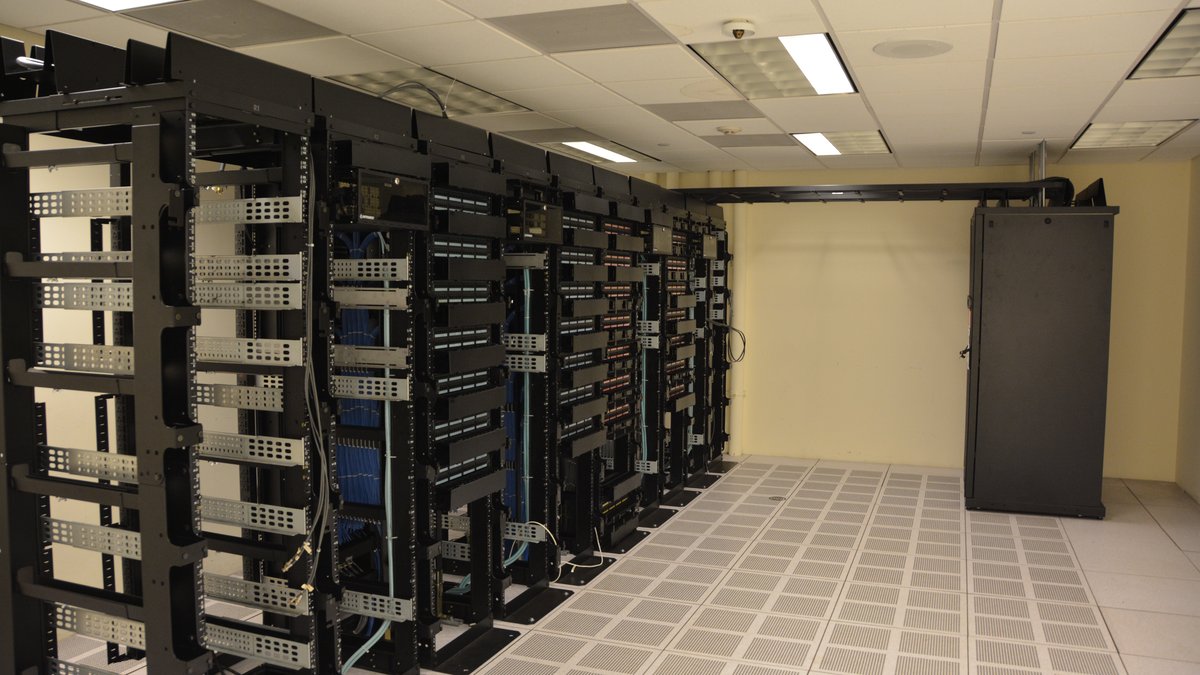
Generic photo of server racks in a data centre, used for illustration only; not a photo of any Tasmanian facility.

Diagrams comparing three data centre cooling methods: evaporative towers, closed loop systems, and free-air cooling, showing how each moves heat away and how much water each uses.

  • Evaporative cooling towers

    Warm water sprays through a tower and cools as some evaporates into the air. Up to 85% of the water used evaporates. Uses a lot of water, less electricity.ENV-32

  • Closed loop cooling

    A sealed coolant loop takes heat from the chips or servers and goes round again. Heat is released through a dry heat exchanger or chillers. Water use for the cooling itself can be close to zero. Chillers use more electricity.ENV-07ENV-32

  • Free-air and adiabatic

    Outside air cools the servers directly. Adiabatic systems spray water into the air to pre-cool it on hot days. Water use depends on how many hours need that help.ENV-07ENV-32

Withdrawn or used up?

Withdrawn water is water taken from a source, such as mains supply, a rainwater tank or a delivery truck. Consumed water is the part not returned, mostly what evaporates. The rest leaves the site as wastewater, usually warmer than when it arrived. No source found gives a discharge temperature for any Tasmanian site.ENV-33 No Tasmanian proposal publishes a water-efficiency (WUE) figure.ENV-07

Avoiding evaporation usually costs more electricity: independent modelling by the Uptime Institute puts an air-cooled chiller plant at a PUE of 1.8, against 1.6 for a water-cooled plant running the same computers: about 12.5% more total electricity.ENV-56 Tasmania's cool climate gives more hours of free outside-air cooling, which generally narrows that gap. No Tasmanian proposal has published how many hours that is.ENV-57

Site by site

What each company discloses about cooling and water, by site (company figures, not audited):

  • St Leonards (Firmus)Immersion cooling with a closed-loop heat exchanger. The company says the coolant has a 20-year lifespan, and that the site uses about 3.3 million litres of water a year.ENV-34STY-12ENV-01ENV-21
  • Bell Bay (Firmus, approved)Direct-to-chip liquid cooling, according to the company's FAQ.STY-11 The company says it uses about 8.7 million litres of water a year.ENV-21
  • Wesley Vale (Firmus, proposed)20 adiabatic coolers and 20 chillers; no TasWater connection. Rainwater stored in four 250,000-litre tanks (1 million litres), with water trucked in during extreme dry periods. Water cooling only above 26°C. Company figure: about 700,000 litres a year.LOC-08ENV-01ENV-02ENV-21
  • Viridis, Burnie (approved, about 1 MW)Free-air cooling; no water-cooling plant.ENV-12LOC-07

None of the three Firmus sites plans to draw on Tasmania's reticulated water system for cooling. Wesley Vale would use rainwater, with water trucked in during extreme dry periods, triggered only above 26°C.ENV-01ENV-02 TasWater told a November 2025 hearing it does not supply water to the AI facility at St Leonards.ENV-101 Firmus's own figures put its water use at 3.3 million litres a year at St Leonards, 8.7 million at Bell Bay, and 700,000 at Wesley Vale — the company compares this to a handful of restaurants a year, a comparison it chose itself. These are company claims. No independent audit of them was found.ENV-01ENV-21

Water: company figures, and a statewide projection

Company-claimed litres per year, by site, plus every proposed data centre projected from those figures company claim; projection

Water used, litres a year

  • St Leonards3.3 million L
  • Bell Bay8.7 million L
  • Wesley Vale700,000 L
  • Every proposed data centre, projected27.0–32.9 million L
  • For comparison
  • Olympic pool2.5 million L
  • Average TasWater household, per year182,000 L

Source: Firmus Technologies, as reported by ABC News; TasWater annual performance report 2024-25ENV-01ENV-21ENV-36ENV-37

Where Tasmania's water comes from, and who uses it

Where it comes from 381.9 GL
Who uses it 381.9 GL
  • Taken straight from rivers, dams and bores 193.3 GL
  • Delivered by water utilities and irrigation schemes 188.5 GL
  • Farming, forestry and fishing 334.0 GL
  • Households 34.5 GL
  • Other industries 13.3 GL
  • Every proposed data centre, projected 27–33 ML (too small to see at this scale)

These are ABS figures for 2021-22, the latest available. Mining and manufacturing water use isn't published, and hydro water is returned to rivers, so neither counts here.ENV-55ENV-01ENV-21

View as a table
ML a year
Taken straight from rivers, dams and bores193,345.5
Delivered by water utilities and irrigation schemes188,530.1
Farming, forestry and fishing333,985.7
Households34,546.4
Other industries13,343.5
Every proposed data centre, projected27.0–32.9

For scale: an estimated 93,600 GL of rain falls on Tasmania each year, and groundwater in use is under 126 GL. TasWater's network supplies 69.7 GL.ENV-51ENV-52ENV-53ENV-54ENV-37

How much water does Tasmania's public network supply?

Urban water supplied statewide, ML a year

This is TasWater's network supply — the regulator's data item W11 — not all water used in Tasmania: it excludes irrigation water, private bores and tanks, and the water that flows through Hydro Tasmania's turbines. The years before 2012-13 are unknown, not zero.

Data table
Financial yearML suppliedSource
2005-06unknown
2011-12unknown
2012-1360,429ENV-82
2013-1453,934ENV-83
2014-1554,592ENV-84
2015-1652,383ENV-85
2016-1756,155ENV-86
2017-1865,991ENV-87
2018-1967,000ENV-88
2019-2065,537ENV-89
2020-2164,964ENV-90
2021-2263,255ENV-91
2022-2362,494ENV-92
2023-2473,809ENV-93
2024-2569,749ENV-37

Bell Bay's claimed water use against the state's

Megalitres a year. The site figure is the company's own company claim. The state figures are ABS 2021-22.

Water used, megalitres a year

  • Tasmania, all published sectors (2021-22)381,876 ML
  • Tasmanian households (2021-22)34,546 ML
  • Bell Bay data centre, per year (company claim)8.7 ML

Bell Bay's claimed yearly use equals 0.0023% of Tasmania's water use in 2021-22, the latest ABS figures, or 0.025% of household use. That total leaves out mining and manufacturing water use, which the ABS does not publish, so the real share would be lower.ENV-21ENV-55

Diesel and bushfire risk

Backup diesel: what’s stored

Wesley Vale’s proposal includes 40 backup diesel generators, each holding up to 10,000 litres, for 400,000 litres stored on site (about 16% of an Olympic pool’s 2.5 million litres).ENV-19ENV-36 Bell Bay has 276 approved backup diesel generators.ENV-13ENV-14ENV-45 How much diesel Bell Bay stores, and how long either site could run on stored fuel, has not been disclosed.ENV-13ENV-14ENV-19

Real generators like these typically burn 406 to 528 litres of diesel an hour each at full load, and about 0.236 to 0.264 litres per kilowatt-hour produced. These figures come from four manufacturers' spec sheets for similar-sized units: Caterpillar, Cummins, mtu and Kohler. None is confirmed as the actual model at any Tasmanian site.ENV-60ENV-61ENV-62ENV-63 At Wesley Vale, 400,000 litres on site running at the site's full 52 MW would last about 29 to 33 hours. That is an estimate assuming all 40 generators share the load evenly, using generic burn rates.ENV-19ENV-60ENV-61ENV-62ENV-63

Bell Bay’s generators are capped at 24 hours a year, for mains failure, testing or emergencies. Council required an updated bushfire and emergency plan before construction, after Firmus corrected its generator count from 128 to 276.ENV-13ENV-14 Firmus has appealed the cap to TASCAT as “unreasonable”, wanting to use the generators to offset curtailment; the appeal is pending.ENV-45 Tasmania’s Bushfire-Prone Areas Code applies to land mapped as bushfire-prone. Both sites fall within this overlay: Bell Bay’s surrounding vegetation is mapped as dry eucalypt forest, adapted to fire, while Wesley Vale sits on modified farmland that is also mapped bushfire-prone.ENV-46ENV-65ENV-66ENV-68 Four of the six confidential proposals have no published location, so whether they would fall within the overlay is unknown.COM-02COM-03 The one named among them, the former Liberty Bell Bay smelter, is mapped bushfire-prone.ENV-65ENV-68

Fire danger itself is projected to rise. A downscaled regional climate model for Tasmania projects at least 120% more Very High Fire Danger days a year by 2100, over more than twice the area, with the fire season starting at least a month earlier. The weather pattern behind Tasmania’s worst fire days is also projected to become more frequent. Both figures are model projections to 2100, validated against observed weather for 2002-2012.ENV-98ENV-100

Nothing requires a data centre to run a fire service of its own. An aerodrome over 350,000 passengers a year must have a rescue and fire fighting service.ENV-94 A major hazard facility — a refinery, say; Tasmania has none operating — must keep fire-fighting equipment and trained staff on site for first response, handing suppression to the fire service.ENV-97 The National Construction Code asks a building only for hydrants and sprinklers, and those are for the fire brigade’s use.ENV-96

Tasmania’s State Emergency Service does not fight fires; its bushfire role is limited to support functions such as evacuations, traffic management and logistics.ENV-69ENV-70 In 2022-23 the Tasmania Fire Service employed 518 staff, of whom 353 were career firefighters, and it relies heavily on volunteer brigades.ENV-69 For scale, a 2021 fire at the Victorian Big Battery near Moorabool required more than 30 fire trucks and about four days to bring under control, and a 2021 fire at OVHcloud’s Strasbourg data centre required 115 firefighters and 44 vehicles, with the building destroyed regardless.ENV-71 ENV-72
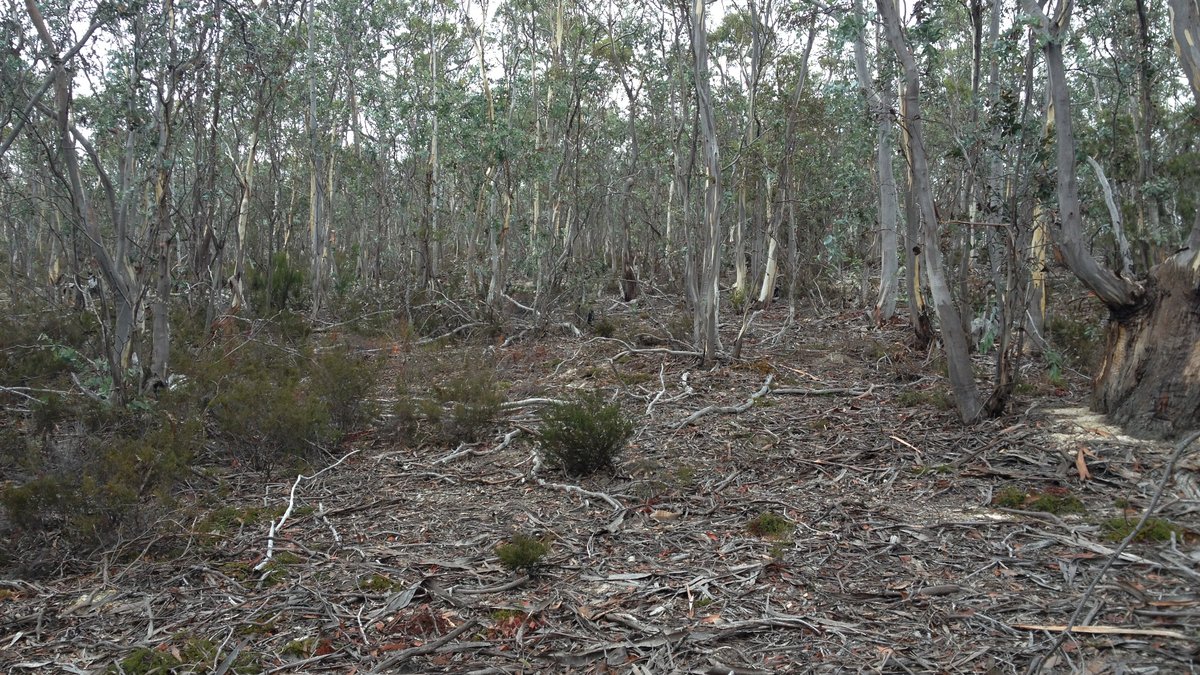
Photo of dry eucalypt (sclerophyll) forest at Sandford, south-east of Hobart, Tasmania. Illustrative image of bushfire-prone bushland, not a data centre site.

Diesel backup at the data centres

Storage and generator run-time limits, where disclosed

Diesel stored and generator limits

Diesel stored on site, litres

  • Wesley Vale400,000 L
  • Bell BayStorage volume not disclosed

Generator run-time cap, hours per year

Bell Bay 24 hours a year, out of 8,760 (0.27%)

Firmus has appealed to TASCATENV-45

Source: ABC News; w.mediaENV-13ENV-14ENV-19ENV-45

Scenario: diesel for 24 hours at full load, in days of Tasmania's diesel sales

Bundled across every proposal, plus each disclosed site, each in litres and in days of Tasmania's diesel sales, against a one-day reference bar. Based on published fuel rates for four makes of 1.65–2 MW generators; the generators at these sites are not disclosed.

Diesel burned in 24 hours at full load, litres

Tasmania's average diesel sales, one day 1.7 million L
Every proposed data centre, 945–1,150 MW 5.35–7.29 ML · 149–202 tankers · 3.1–4.2 days
Bell Bay, 288 MW 1.63–1.82 ML · 45–51 tankers · 0.9–1.0 days
Wesley Vale, 52 MW 0.29–0.33 ML · 8–9 tankers · 0.17–0.19 days

Wesley Vale's disclosed 400,000 litres would last about 29 to 33 hours at its full 52 MW, using manufacturer fuel rates for generators of this size.ENV-19ENV-60ENV-61ENV-62ENV-63

This is a projected scenario. No source says any site stores 24 hours of diesel. Bell Bay's council cap of 24 hours a year limits running time. It is not a storage figure. Generator models at these sites are not disclosed.ENV-13ENV-14ENV-64ENV-79ENV-16GRD-06GRD-07

Data table
SiteLitres for 24 hRoad tankersDays of Tasmania's diesel sales
Tasmania's average diesel sales, one day1,747,6711
Every proposed data centre, 945–1,150 MW5,352,480–7,286,400149–2023.1–4.2
Bell Bay, 288 MW1,631,232–1,824,76845–510.9–1.0
Wesley Vale, 52 MW294,528–329,4728–90.17–0.19

Across every proposed facility at once, this same 24-hour, full-load scenario would need an estimated 5.4 to 7.3 million litres of diesel, or about 149 to 202 road tankers at 36,000 litres each. That's as much diesel as Tasmania sells in 3.1 to 4.2 days, on average.ENV-79 On 17 April 2026 the government gave two figures, on the same day, for diesel held on the island or on the way: 48 days and 58 days. Stored litres are not public.ENV-77ENV-78ENV-80 No operator has stated how much fuel it would store or use, and the upper figure relies on the higher, disputed 705 MW total for the confidential proposals.ENV-16GRD-06GRD-07COM-03ENV-62ENV-63ENV-64

Heat and emissions

Tasmania's economy has recorded net-negative greenhouse gas emissions for eleven years running, driven mostly by its forests.ENV-28 Independent analysis warns that new demand not matched by genuinely new renewable generation could still raise emissions elsewhere in the National Electricity Market, because Tasmanian power that would otherwise be exported gets used at home instead.ENV-24ENV-25

Communities

Tasmanian Government messaging emphasises jobs and investment. Independent evidence, and the people living next to these sites, tell a more mixed story.COM-01COM-09COM-13

  • Claim

    Firmus says its Bell Bay site will create 380 or more construction jobs and 115 or more ongoing jobs.COM-13

    Evidence

    That works out to about 0.4 ongoing jobs per megawatt — lower than ratios computed from Virginia's data centre workforce (1.1 to 1.5 jobs per MW) or Ireland's (roughly 3 to 5 jobs per MW).COM-06COM-07COM-13COM-16

  • Claim

    George Town's Mayor said the council saw no grounds to refuse Firmus's Bell Bay application under “the local planning scheme”.COM-01

    Evidence

    University of Tasmania professor David Adams says the Land Use Planning and Approvals Act is “not fit for purpose” because it does not weigh cumulative impacts or a community's broader consent.COM-01

  • Claim

    The Bell Bay application drew 349 written submissions and thousands of petition signatures against it.COM-13COM-14

    Evidence

    Council approved it anyway, 6 votes to 1.COM-13COM-23LOC-09 On 30 August objecting residents said they intended to appeal to the state planning tribunal, at an estimated legal cost of $20,000 to $50,000. No source found confirms an appeal has since been lodged.COM-01

  • Claim

    Firmus announced community drop-in sessions and webinars after the Bell Bay approval.COM-09

    Evidence

    The phrase “genuine community engagement” is the government's, from its draft rules, not Firmus's. Those rules are not yet in force, and would not have applied to Bell Bay, which was approved before the draft was released. Firmus's sessions came after that approval.COM-04COM-05COM-09ENV-15

How the planning process works

Under Tasmania's standard process, anyone can object to a development application during its 14-day advertising period. After a council decides, objectors have another 14 days to appeal to the Tasmanian Civil and Administrative Tribunal.COM-01 Data centre proposals go through this same general process — there is no separate track for them.ENV-15

Tasmania regulates data centres the same way it regulates other large industrial projects. A proposal above a size threshold goes to the EPA Board under the Environmental Management and Pollution Control Act, and the local council assesses it under the Tasmanian Planning Scheme's “Storage Use (Data Centre)” category.ENV-10ENV-11ENV-12 There is no separate, faster approval track for data centres or AI infrastructure.ENV-15 Bell Bay's approval came with conditions: a noise survey within 60 days of starting operations, an air quality assessment within a year, and a new bushfire plan before construction begins.ENV-13ENV-14

The case for

Government and industry make several arguments for building data centres in Tasmania. Each is stated here as its proponent puts it, followed by what the independent evidence shows.

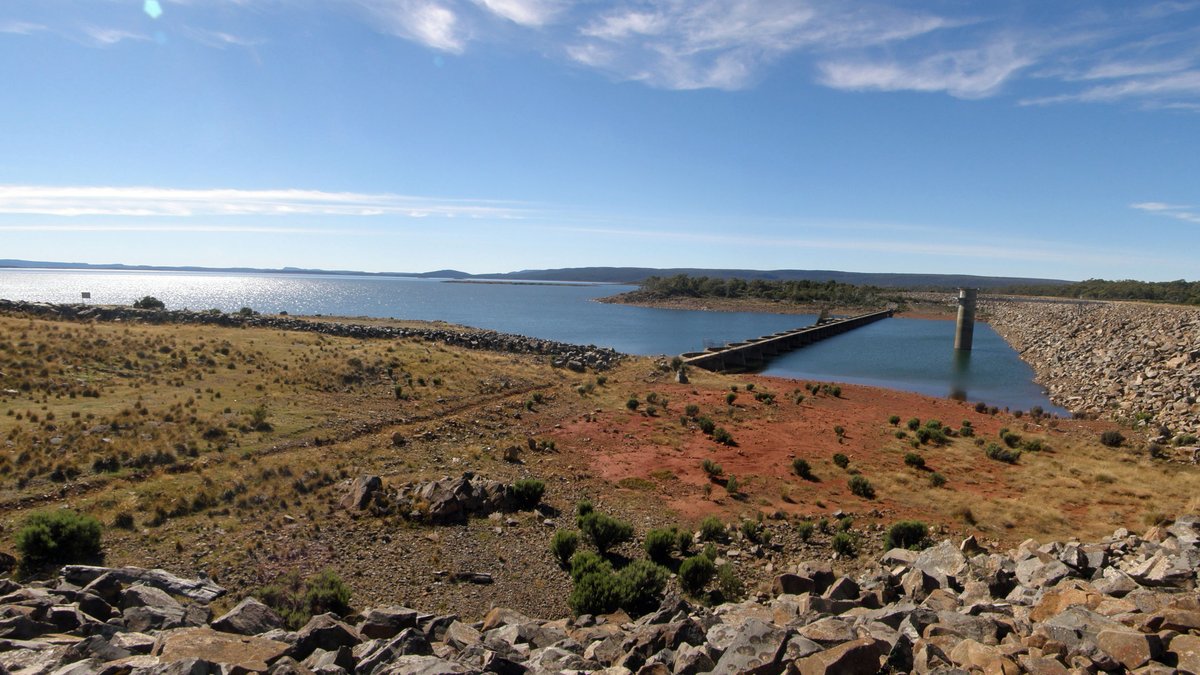
General view of Great Lake, Central Highlands, Tasmania, photographed in 2012. Not evidence of current water storage levels.

Economic development and jobs

Energy and Renewables Minister Nick Duigan says data centres and AI infrastructure “present real opportunities for Tasmania through jobs, investment, and economic diversification”.STY-01STY-02STY-03

Evidence check

The government has not named the six confidential proposals, so their claimed benefits cannot be checked before approval.STY-04 Firmus's own figures for its one approved, named project are the most concrete jobs numbers found — 380-plus construction and 115-plus ongoing roles at Bell Bay. These are company projections with no audit.STY-13STY-14 Firmus's Wesley Vale proposal gives similar figures: 70 construction roles against 20 ongoing.COM-16 Across both projects, that is roughly three construction roles for every one permanent role, and construction roles end when construction ends.

Tasmania's renewable surplus

The government's pitch is that Tasmania's renewable generation gives it room to host data centres.STY-01STY-02

Evidence check

Independent policy group Climate Tasmania says the state's 200% renewable target depends heavily on power exported to the mainland. It says there is no confirmed surplus set aside for new industry.STY-17 Hydro Tasmania itself describes the system as currently “in balance.” It generates about as much power as it uses.STY-05

New renewable generation funded by the data centres themselves

The draft Statement of Expectations would require developers to fund new, additional renewable generation rather than draw down the existing supply.STY-01STY-02STY-03 Firmus says it will finance “double the amount of renewable energy that it uses”.STY-21

Evidence check

This rule is still a draft, open for consultation until 12 October 2026.STY-02 Independent energy analyst Marc White points to a limit the policy doesn't resolve: Tasmania's transmission capacity to the mainland is finite, so power committed to local data centres cannot also be exported.STY-06

Underwriting Marinus Link

A Marinus Link spokesperson says rising data centre demand is “further proof of the necessity” of the interconnector project.STY-06

Evidence check

Climate Change Authority chair Matt Kean takes the opposite view — he says Firmus's proposed load “does bring into doubt the business case for the Marinus Link”.STY-06 Marinus Link's own published overview material does not mention data centres as a reason for the project.STY-07

Cooler climate, more efficient cooling

Firmus claims a Power Usage Effectiveness of 1.03 at its Tasmanian sites, against a global average of 1.59, from Tasmania's cool climate and immersion cooling company claim.STY-12

Evidence check

This is a company figure with no independent audit found.STY-11STY-12 Independently reported Nordic data centres, in a comparably cool climate, report PUE of 1.1 to 1.15 — plausible in direction, higher than Firmus's claimed number.PAR-14

Grid stability

Firmus describes its data centres as “dispatchable” and says its “SynerT” technology is already delivering “certified” grid services.STY-11STY-15STY-23

Evidence check

A 2022 filing to the market operator tells a different story. The system actually registered and delivering frequency response at St Leonards had no battery. It was a load-side controller that cut the site's own power draw, scaling from 2 MW to 17 MW by February 2022. A separate 2 MW battery at the same site was still an uncommissioned proof of concept when the filing was made. The dispatchability claim describes the larger Bell Bay site instead. No independent confirmation of current, live grid-service delivery at Bell Bay's scale was found.STY-23STY-24

Elsewhere

Tasmania is not the first small grid to face a wave of data centre demand. These places show what can happen next.

  • Dublin, Ireland

    Data centres grew from about 5% of Ireland's electricity in 2015 to 22% by 2024. The grid operator froze new Dublin-area connections from 2021. In December 2025 the freeze was replaced with conditions: new data centres must supply their own backup power and source at least 80% of demand from new renewables.PAR-03PAR-04PAR-05

    Tasmanian context

    Ireland's post-freeze rules are close to a mandatory version of Tasmania's draft Statement of Expectations — a live example of what enforcing similar rules looks like.

  • Amsterdam, Netherlands

    The Netherlands paused new hyperscale data centres above 70 MW and 10 hectares from February 2022, and from January 2024 banned them outright everywhere except two designated municipalities. At least seven large projects went ahead anyway because their permits predated the ban — including one built as three separate towers, each just under the threshold.PAR-06PAR-20PAR-07PAR-16

    Tasmanian context

    A ban does not stop projects already in the pipeline, and large proponents can structure applications around a threshold. Tasmania's government has already ruled out a moratorium while several proposals move through approval.COM-12

  • Singapore

    Singapore paused new large data centre approvals from 2019 to 2022, then reopened access through a capped pilot. The pilot provisionally awarded about 80 MW of new capacity to four operators — AirTrunk-ByteDance, Equinix, GDS and Microsoft — drawn from more than 20 proposals. Regulators plan further allocations over the following 12 to 18 months.PAR-17PAR-19

    Tasmanian context

    It shows one way a small, resource-constrained place can allocate access by merit.

  • Loudoun County, Virginia

    The world's densest cluster of data centres pushed local power demand from about 1 GW in 2018 to 5.33 GW in 2025. The county ended automatic approval for new data centres in 2025.PAR-09PAR-10

    Tasmanian context

    It is the clearest picture of what unmanaged, concentrated growth can do to a grid — but it also shows data centres can be an efficient source of local tax revenue, cutting both ways on the “economic benefit” argument.

  • Arizona and Texas

    In drought-affected Arizona, data centres' indirect water use, from cooling the power plants that supply them, could reach an estimated 14.5 billion gallons a year. In Texas, the grid operator projects capacity needs could roughly double by 2031, driven largely by data centres.PAR-11PAR-12

    Tasmanian context

    Tasmania is water-abundant and hydro-powered, unlike these two, so this is a contrast more than a direct parallel. The grid-strain pattern — a handful of large loads reshaping demand — is directly relevant to a small system like Tasmania's.

  • Iceland and Norway

    Both countries pair a cool climate with a renewable-dominated grid, similar to Tasmania. Independently reported Nordic data centres achieve PUE of 1.1 to 1.15.PAR-14

    Tasmanian context

    It is the closest climate-and-generation match to Tasmania found in this research. See Heat and emissions for what these operators do with their waste heat.

The transparency gap

Several figures central to Tasmania's AI data centre build are not public. Some numbers conflict because two outlets read the same document differently. Others have simply not been released.

Six confidential proposals, two different totals

The government has kept six data centre proposals confidential and has not named the companies or confirmed their scale. ABC News and The Examiner both read the same document tabled in state parliament and reported different combined totals: at least 500 MW by one account, up to 705 MW by another. No government release confirms either figure.COM-02COM-03

How much of this gets built?

AEMO's 2026 forecast counts 225 data centre projects in development nationally, and found 36% of the projects in development listed a year earlier were later cancelled.PAR-01 TasNetworks' most recent Annual Planning Report, published in 2025, includes no data centre load in its Tasmanian demand forecast.GRD-78 Hydro Tasmania's published criteria for assessing Firmus's 450 MW request test whether Firmus is financially stable and whether a deal is commercially worthwhile, not how much of the proposed load to expect.GRD-08 A proposed megawatt is not a delivered megawatt.

Connection terms and the load-shedding order

A published, ranked list of which customers get cut off first if supply is constrained could not be found.GRD-48GRD-49GRD-50GRD-51GRD-53GRD-57 Whether Firmus's own connections are firm, interruptible or curtailable could not be found either.GRD-50GRD-51GRD-53 Every documented activation found — in 2016, 2017 and August 2025 — followed a Basslink or cooling-system disturbance rather than fire damage.GRD-52GRD-55 In the 2017 event, an automatic scheme shed 385 MW of large industrial load within seconds of a network disturbance, and restored it within about 48 minutes.GRD-52

Capacity figures that don't reconcile

St Leonards is reported at both 90 MW, a construction approval, and 104 MW, a separate energy contract. They measure different things, so both are correct.GRD-06GRD-08COM-09COM-16STY-11LOC-10LOC-11 Firmus's three sites add up to 444 MW, the figure this page uses. Hydro Tasmania is separately assessing a Firmus request for 450 MW.GRD-06GRD-08

Diesel, water and permits

No public figure was found for how much diesel Bell Bay's 276 approved backup generators store, or how long they could run on it.ENV-13ENV-14 Company water-use figures for Bell Bay, St Leonards and Wesley Vale come from the companies themselves and have not been independently audited.ENV-01ENV-21 No public planning permit or development application number was found for the three Firmus sites or for Viridis's Burnie approval, including the St Leonards approval, which was reported without a permit reference.LOC-07LOC-10LOC-11LOC-16LOC-19

Why it matters

The draft Statement of Expectations covers network costs alongside renewable energy, water use and community engagement, and expects developers to fund required transmission upgrades themselves.COM-05COM-04COM-17 The Climate Change Authority's chair has said Firmus's data centre load already brings the business case for the Marinus Link interconnector into doubt.STY-06 These are the kinds of figures that touch power bills, the state's finances and grid security. Figures like these — water use and cooling method among them — should be public before approval decisions are made.

Have your say

17days left to make a submission

The Tasmanian Government is consulting on a draft Statement of Expectations for data centres and AI infrastructure. The draft covers renewable energy, network costs, water use and community engagement. Submissions close 12 October 2026.COM-05

Submissions can address any part of the draft — energy, water, jobs, planning or community impact. The official consultation page has the full document and explains how to respond.

Have your say on the draft (opens in a new tab)

Opens the Tasmanian Government's consultation site.

Guide to the consultation questions

Share this page

Send the 2-minute version to someone.

This site is independent. It is not affiliated with, and not endorsed by, the Tasmanian Government or the consultation process.

This site collects nothing about you. If you make a submission, that goes to the Tasmanian Government directly, under its own process.

Method and sources

Every figure on this page traces to a source in the register below.

How sourcing works on this page

Here's what each part of a source pill means.

  1. The three-letter code shows which part of the story it supports.
  2. Colour repeats the grouping. The icon shows the source type.
  3. Click a pill to jump straight to that source in the list.
  4. In the list, its ↑ pill returns you to where you were.
Full method and sources

Sources are labelled by type:

Primary
Government agencies, regulators or the market operator, publishing their own data.
Independent
Researchers, non-partisan analysts or specialist journalism with no stake in the outcome.
Industry
Companies, industry bodies or trade press with a commercial interest in data centres being built.
Media
General news reporting.

A small number of sources are also labelled advocacy (a campaign group with a stated position) or political (a political party's own material). These are read with their stated position in mind, and the specific figures they carry are still checked.

Where a figure is shown as “unknown,” it means no source found states it — not that the true figure is zero or unimportant. Where two credible sources give different figures for the same thing, both are shown and the difference is noted.

This page was built from council records, government reports, company disclosures and independent journalism, all listed in Sources. Companies' own claims about water use, jobs and environmental performance are labelled as company claims throughout, because none of them has been independently audited.

Last updated: 24 September 2026.

Every figure on this page links to the source it came from. A source's colour and three-letter code show which part of the story it supports; its icon shows what kind of source it is.

  • LOC Individual sites: location, operator, capacity, planning status.
  • GRD The power grid: supply, demand, dams, Basslink.
  • ENV Water, land, heat, diesel and bushfire risk.
  • COM Communities, councils, the six confidential proposals, parliament.
  • STY Claims made for data centres, checked against evidence.
  • PAR Comparable places elsewhere, such as Iceland and Amsterdam.
  • Primary — the original document
  • Independent — research or analysis
  • Industry — a company or trade body
  • Media — news reporting
  • Advocacy — a campaigning group
  • Reference — a standard, spec or statistical series

In the list below, click a code with an arrow ↑ to jump back to the place on the page where that source is used.

See all 186 sources
  1. LOC-01 Data Centre (opens in a new tab), 42-24 (FortyTwo24 Pty Ltd). industryAccessed 2026-09-13 5 mentions
  2. LOC-02 DC3 Data Centre (opens in a new tab), TasmaNet Pty Ltd. industryAccessed 2026-09-13 4 mentions
  3. LOC-03 DXN exits Tasmania data centre business in $520K divestment (opens in a new tab), ARN (Australian Reseller News, IDG). mediaAccessed 2026-09-13
  4. LOC-04 TasNetworks Data Centre (opens in a new tab), A.G. Coombs (mechanical services contractor). industryAccessed 2026-09-13 3 mentions
  5. LOC-05 University of Tasmania loses $5m HPC cluster to floods (opens in a new tab), iTnews. mediaAccessed 2026-09-13 4 mentions
  6. LOC-06 University of Tasmania to install new supercomputing cluster (opens in a new tab), iTnews. mediaAccessed 2026-09-13
  7. LOC-07 Viridis Tasmanian Data centre development given planning approval (opens in a new tab), VIRIDIS Green Data Centres Limited. industryAccessed 2026-09-13 3 mentions
  8. LOC-08 Firmus seeks approval for Wesley Vale AI data centre (opens in a new tab), w.media (Asia-Pacific data centre trade press). mediaAccessed 2026-09-13 3 mentions
  9. LOC-09 Firmus secures approval for 288MW Bell Bay AI factory (opens in a new tab), w.media. mediaAccessed 2026-09-13 2 mentions
  10. LOC-10 Firmus wins approval to build $2.1bn AI Factory in Launceston (opens in a new tab), w.media. mediaAccessed 2026-09-13 4 mentions
  11. LOC-11 $2.1 billion AI factory approval to boost Launceston economy (opens in a new tab), The Examiner (Launceston). mediaAccessed 2026-09-13 4 mentions
  12. LOC-12 Tasmanian Colo (homepage) (opens in a new tab), Tasmanian Colo. industryAccessed 2026-09-13 3 mentions
  13. LOC-13 Cloud company locks in cool Tasmanian site for high-grade data centre (opens in a new tab), ABC News. mediaAccessed 2026-09-13
  14. LOC-14 About Us (opens in a new tab), 42-24 (FortyTwo24 Pty Ltd). industryAccessed 2026-09-13 2 mentions
  15. LOC-15 TasNetworks, 42-24, and NNNCo to build LoRaWAN carrier network, bringing IoT connectivity to Tasmania (opens in a new tab), TasNetworks / 42-24 / NNNCo (joint press release, hosted by LoRa Alliance). primaryAccessed 2026-09-13 2 mentions
  16. LOC-16 George Town Council — Development Applications listing (opens in a new tab), George Town Council. primaryAccessed 2026-09-13
  17. LOC-17 PIPE Networks Hobart (opens in a new tab), PeeringDB (industry-run interconnection registry; facility record is self-reported by the facility's own org, here listed as Vocus Group). primaryAccessed 2026-09-16 4 mentions
  18. LOC-19 Planning Applications on Public Exhibition (opens in a new tab), Latrobe Council. primaryAccessed 2026-09-13 2 mentions
  19. LOC-20 TasmaNet Pty Ltd: DC3 Data Centre — Hobart (opens in a new tab), Datacenters.com. mediaAccessed 2026-09-15
  20. LOC-23 TPAC (Tasmanian Partnership for Advanced Computing) homepage, University of Tasmania (TPAC consortium) (opens in a new tab). primaryAccessed 2026-09-15
  21. GRD-01 Energy in Tasmania Report 2023-24 (opens in a new tab), Tasmanian Economic Regulator (Office of the Tasmanian Economic Regulator). primaryAccessed 2026-09-13 8 mentions
  22. GRD-02 Energy in Tasmania Report 2024-25 (CORRECTED) (opens in a new tab), Tasmanian Economic Regulator. primaryAccessed 2026-09-21 22 mentions
  23. GRD-05 Energy in Tasmania Report 2015-16 (opens in a new tab), Office of the Tasmanian Economic Regulator. primaryAccessed 2026-09-13 13 mentions
  24. GRD-06 Our silent power surge: six secret AI data centre proposals revealed (opens in a new tab), The Examiner (Launceston, TAS) — Australian Community Media. mediaAccessed 2026-09-13 20 mentions
  25. GRD-07 Six new AI data centres proposed for Tasmania, but companies behind them are being kept secret (opens in a new tab), ABC News. mediaAccessed 2026-09-13 13 mentions
  26. GRD-08 Hydro Tasmania to decide by end of year on AI data centre company Firmus's request for 450 MW (opens in a new tab), ABC News. mediaAccessed 2026-09-13 8 mentions
  27. GRD-15 AER Final Decision - Marinus Link Stage 1, Part B (Construction costs) - February 2026 (opens in a new tab), Australian Energy Regulator (AER). primaryAccessed 2026-09-13 2 mentions
  28. GRD-17 Marinus Link — Overview (opens in a new tab), Marinus Link Pty Ltd (project company, jointly owned by Tasmanian and Australian governments). industryAccessed 2026-09-13 4 mentions
  29. GRD-18 Basslink — Determination 2026–30 (opens in a new tab), Australian Energy Regulator (AER). primaryAccessed 2026-09-13
  30. GRD-20 Basslink (opens in a new tab), Wikipedia. referenceAccessed 2026-09-13
  31. GRD-30 Hydro Tasmania Annual Report 2003/04 (opens in a new tab), Hydro Tasmania. primaryAccessed 2026-09-15 3 mentions
  32. GRD-31 Hydro Tasmania Annual Report 2004/2005 (incorporating inaugural Sustainability Report) (opens in a new tab), Hydro Tasmania. primaryAccessed 2026-09-15 2 mentions
  33. GRD-33 Hydro Tasmania Annual Report 2007/08 (opens in a new tab), Hydro Tasmania. primaryAccessed 2026-09-15 4 mentions
  34. GRD-34 Hydro Tasmania Annual Report 2008/09 (opens in a new tab), Hydro Tasmania. primaryAccessed 2026-09-15 2 mentions
  35. GRD-35 Hydro Tasmania Annual Report 2009/10 (opens in a new tab), Hydro Tasmania. primaryAccessed 2026-09-15 2 mentions
  36. GRD-36 Hydro Tasmania Annual Report 2010/11 (opens in a new tab), Hydro Tasmania. primaryAccessed 2026-09-15 2 mentions
  37. GRD-37 Energy in Tasmania – Performance Report 2013-14 (opens in a new tab), Office of the Tasmanian Economic Regulator. primaryAccessed 2026-09-15 4 mentions
  38. GRD-38 Energy in Tasmania Report 2016-17 (opens in a new tab), Office of the Tasmanian Economic Regulator. primaryAccessed 2026-09-15 5 mentions
  39. GRD-39 Energy in Tasmania Report 2017-18 (opens in a new tab), Office of the Tasmanian Economic Regulator. primaryAccessed 2026-09-15 2 mentions
  40. GRD-40 Energy in Tasmania Report 2018-19 (opens in a new tab), Office of the Tasmanian Economic Regulator. primaryAccessed 2026-09-15 6 mentions
  41. GRD-43 Tasmanian power station catches fire (opens in a new tab), ABC News. mediaAccessed 2026-09-15
  42. GRD-44 Tungatinah power station fire impact energy network Tasmania (opens in a new tab), ABC News. mediaAccessed 2026-09-15 2 mentions
  43. GRD-45 Tas Tungatinah power station fire cause (opens in a new tab), ABC News. mediaAccessed 2026-09-15 2 mentions
  44. GRD-46 Fourth subsea data cable for Tasmania edges closer (opens in a new tab), iTnews. mediaAccessed 2026-09-15 2 mentions
  45. GRD-47 Tasmania's internet outage caused by damaged Telstra cables demonstrates the state's vulnerability (opens in a new tab), ABC News. mediaAccessed 2026-09-15
  46. GRD-48 Electricity Supply Industry Act 1995 (Tas), in-force consolidated version (opens in a new tab), Tasmanian Government (legislation.tas.gov.au). primaryAccessed 2026-09-16
  47. GRD-49 Bushfire Risk Mitigation Plan (29 November 2018) (opens in a new tab), TasNetworks (AER-hosted copy). primaryAccessed 2026-09-16
  48. GRD-50 "Meeting Network Planning Requirements at George Town," RIT-T Project Specification Consultation Report (opens in a new tab), TasNetworks. primaryAccessed 2026-09-16 2 mentions
  49. GRD-51 "Managing risk on the George Town – TEMCO transmission line," RIT-T Project Specification Consultation Report (opens in a new tab), TasNetworks. primaryAccessed 2026-09-16 2 mentions
  50. GRD-52 "Basslink outage and under frequency load shedding in Tasmania on 12 March 2017," Reviewable Operating Incident Report (opens in a new tab), AEMO. primaryAccessed 2026-09-16 2 mentions
  51. GRD-53 TasNetworks submission to AEMO's 2026 GPSRR (General Power System Risk Review) Approach Paper consultation (opens in a new tab), TasNetworks (submission to AEMO). primaryAccessed 2026-09-16 2 mentions
  52. GRD-55 Tasmanian demand drop on 16 August 2025 – part 2 (opens in a new tab), WattClarity. mediaAccessed 2026-09-16
  53. GRD-57 Prepare for a Power Outage (opens in a new tab), TasNetworks. primaryAccessed 2026-09-16
  54. GRD-60 Road Vehicles, Australia, January 2025 (opens in a new tab), Bureau of Infrastructure and Transport Research Economics (BITRE), Australian Government. primaryAccessed 2026-09-21 3 mentions
  55. GRD-61 "Survey of Motor Vehicle Use, Australia, 12 months ended 30 June 2020" (Table 4 data file, 92080DO001_202006.xls) (opens in a new tab), Australian Bureau of Statistics (ABS). primaryAccessed 2026-09-21 2 mentions
  56. GRD-63 How much electricity does charging an electric vehicle consume compared to typical household usage? (opens in a new tab), Electric Vehicle Council. industryAccessed 2026-09-21 2 mentions
  57. GRD-66 Electric Vehicles in Tasmania (opens in a new tab), ReCFIT (Renewables, Climate and Future Industries Tasmania, Tasmanian Government). primaryAccessed 2026-09-21 3 mentions
  58. GRD-68 "Australian Energy Statistics 2025, Table O" (Table O15 — Victoria electricity generation by fuel type, calendar year) (opens in a new tab), Department of Climate Change, Energy, the Environment and Water (DCCEEW), Australian Government. primaryAccessed 2026-09-21 2 mentions
  59. GRD-69 Energy in Tasmania Report 2020-21 (opens in a new tab), Tasmanian Economic Regulator. primaryAccessed 2026-09-21 3 mentions
  60. GRD-70 2026 Electricity Statement of Opportunities (opens in a new tab), Australian Energy Market Operator (AEMO). primaryAccessed 2026-09-21 5 mentions
  61. GRD-78 Annual Planning Report 2025 (opens in a new tab), Tasmanian Networks Pty Ltd (TasNetworks). primaryAccessed 2026-09-19
  62. GRD-79 Energy in Tasmania Report 2019-20 (opens in a new tab), Office of the Tasmanian Economic Regulator (OTTER). primaryAccessed 2026-09-20 5 mentions
  63. GRD-80 Energy in Tasmania Report 2021-22 (opens in a new tab), Office of the Tasmanian Economic Regulator (OTTER). primaryAccessed 2026-09-20 3 mentions
  64. GRD-81 Energy in Tasmania Report 2022-23 (opens in a new tab), Office of the Tasmanian Economic Regulator (OTTER). primaryAccessed 2026-09-20 2 mentions
  65. GRD-85 Hydro Tasmania Annual Report 2011/12 (opens in a new tab), Hydro Tasmania. primaryAccessed 2026-09-20
  66. GRD-87 Hydro Tasmania Annual Report 2019/20 (opens in a new tab), Hydro Tasmania. primaryAccessed 2026-09-20 2 mentions
  67. GRD-88 Hydro Tasmania Annual Report 2023/24 (opens in a new tab), Hydro Tasmania. primaryAccessed 2026-09-20 2 mentions
  68. ENV-01 Firmus plans to truck water in and use rainwater to cool proposed Wesley Vale AI data centre (opens in a new tab), ABC News. mediaAccessed 2026-09-13 10 mentions
  69. ENV-02 (same article as ENV-01 — cooling trigger temperature and DA submission dates) (opens in a new tab), ABC News. mediaAccessed 2026-09-13 3 mentions
  70. ENV-07 Multiple industry/technical explainers on Water Usage Effectiveness (WUE) and cooling types (opens in a new tab), Baltimore Aircoil / Equinix / Data Center Knowledge / Ramboll / Introl (aggregated via search). Also: blog.equinix.com (opens in a new tab). industryAccessed 2026-09-13 4 mentions
  71. ENV-10 Assessment Process (opens in a new tab), EPA Tasmania. primaryAccessed 2026-09-13
  72. ENV-11 ACEN Robbins Island Pty Ltd, Jim's Plain Renewable Energy Park, North West Tasmania (opens in a new tab), EPA Tasmania. primaryAccessed 2026-09-13
  73. ENV-12 Viridis Tasmanian Data centre development given planning approval (opens in a new tab), VIRIDIS Green Data Centres Limited. industryAccessed 2026-09-13 3 mentions
  74. ENV-13 Firmus AI Bell Bay Data Centre - Key Facts (288MW, 6-1 vote, conditions) (opens in a new tab), ABC News. mediaAccessed 2026-09-13 9 mentions
  75. ENV-14 Firmus AI data centre at Bell Bay gets tick from planners ahead of George Town Council vote (opens in a new tab), ABC News. mediaAccessed 2026-09-13 9 mentions
  76. ENV-15 Draft Expectations for Data Centres and AI Infrastructure Developers (consultation) + Clear expectations for data centres and AI infrastructure (opens in a new tab), Tasmanian Government (Engage with Building Tasmania / Premier of Tasmania) / Cyber Daily (fetched summary). Also: cyberdaily.au (opens in a new tab). primaryAccessed 2026-09-13 3 mentions
  77. ENV-16 Six new AI data centres proposed for Tasmania, but companies behind them are being kept secret (opens in a new tab), ABC News. mediaAccessed 2026-09-13 5 mentions
  78. ENV-18 Data center waste heat for district heating networks: A review (and related) (opens in a new tab), ScienceDirect / EESI / World Economic Forum (aggregated via search). independentAccessed 2026-09-13
  79. ENV-19 Firmus lodges plans for second Tasmanian AI factory at Bell Bay / Firmus seeks approval for Wesley Vale AI data centre (opens in a new tab), Pulse Tasmania / w.media. Also: w.media (opens in a new tab). mediaAccessed 2026-09-13 6 mentions
  80. ENV-21 Facing public backlash in Tasmania, Firmus moves to calm concerns about its AI data centres (opens in a new tab), ABC News. mediaAccessed 2026-09-13 12 mentions
  81. ENV-24 Seizing the opportunity to do data centres right (opens in a new tab), Climate Council. independentAccessed 2026-09-13
  82. ENV-25 Greenpeace warns AI data centre rollout threatens to derail Australia's clean energy transition (opens in a new tab), pv-tech.org (reporting on a Greenpeace report). mediaAccessed 2026-09-13
  83. ENV-28 Tasmania's Greenhouse Gas Emissions (opens in a new tab), Renewables, Climate and Future Industries Tasmania (ReCFIT). primaryAccessed 2026-09-18
  84. ENV-32 Data Center Water Use (opens in a new tab), MOST Policy Initiative. independentAccessed 2026-09-18 5 mentions
  85. ENV-33 Data centre water consumption (opens in a new tab), npj Clean Water. independentAccessed 2026-09-15
  86. ENV-34 Australia's Firmus launches immersion-cooled bare metal AI cloud with STT GDC (opens in a new tab), Data Center Dynamics. mediaAccessed 2026-09-15 2 mentions
  87. ENV-36 Olympic swimming pool volume (FINA-standard 50m×25m×2m min. depth = 2,500,000 L), aggregated (ClearComfort / sportsgeardaily / Sensazioni, via search) (opens in a new tab). mediaAccessed 2026-09-15 2 mentions
  88. ENV-37 TasWater's Annual Performance Report FY 2024-25 (opens in a new tab), Tasmanian Economic Regulator. primaryAccessed 2026-09-15 3 mentions
  89. ENV-40 Microsoft to supply waste heat to local district heating network in Høje-Taastrup, Denmark (opens in a new tab), Data Center Dynamics. mediaAccessed 2026-09-15
  90. ENV-41 Fortum and Microsoft announce world's largest collaboration to heat homes, services and businesses with sustainable waste heat from new data centre region (opens in a new tab), Fortum. primaryAccessed 2026-09-15
  91. ENV-42 Meta: surplus heat to district heating (opens in a new tab), Ramboll. industryAccessed 2026-09-15
  92. ENV-45 AI data centre company Firmus lodges TASCAT appeal against council's 'unreasonable' restricted generator use (opens in a new tab), ABC News. mediaAccessed 2026-09-15 4 mentions
  93. ENV-46 C13.0 Bushfire-Prone Areas Code (opens in a new tab), Tasmanian Planning Commission / Dept. of State Growth. primaryAccessed 2026-09-15
  94. ENV-51 Annual Climate Statement 2024 (opens in a new tab), Bureau of Meteorology (BoM). primaryAccessed 2026-09-21
  95. ENV-52 Annual Climate Statement 2025 (opens in a new tab), Bureau of Meteorology (BoM). primaryAccessed 2026-09-21
  96. ENV-53 Area of Australia — States and Territories (opens in a new tab), Geoscience Australia. primaryAccessed 2026-09-21
  97. ENV-54 Overview of Groundwater (opens in a new tab), Department of Natural Resources and Environment Tasmania (NRE Tas). primaryAccessed 2026-09-21
  98. ENV-55 Water Account, Australia, 2023-24 financial year — Physical Water Supply and Use, by Water Type, Australia and state/territory (WAADC13_ data cube) (opens in a new tab), Australian Bureau of Statistics (ABS). primaryAccessed 2026-09-21 2 mentions
  99. ENV-56 Ignore Data Center Water Consumption at Your Own Peril (opens in a new tab), Uptime Institute (Journal). independentAccessed 2026-09-21
  100. ENV-57 Best Practices Guide for Energy-Efficient Data Center Design (Revised July 2024) (opens in a new tab), US Department of Energy / Federal Energy Management Program (FEMP). primaryAccessed 2026-09-21
  101. ENV-60 "XQ2000 Rental Generator Set" spec sheet (doc ref LEHE8746-02) (opens in a new tab), Caterpillar / Ohio CAT (authorised dealer). referenceAccessed 2026-09-16 3 mentions
  102. ENV-61 "Generator set data sheet" — C2000D5 (doc ref DS48-CPGK) (opens in a new tab), Cummins Inc. (via Cummins Greece distributor). referenceAccessed 2026-09-16 3 mentions
  103. ENV-62 "mtu 16V4000 DS2250" product data sheet (ref 3238411_PG_spec_16V4000DS2250_2160kVA_3F_FC_50Hz) (opens in a new tab), mtu (Rolls-Royce Power Systems). referenceAccessed 2026-09-16 4 mentions
  104. ENV-63 "Industrial Diesel Generator Set – KD2000" spec sheet (doc ref G5-626, 9/23) (opens in a new tab), Kohler Co.. referenceAccessed 2026-09-16 4 mentions
  105. ENV-64 How Much Fuel Does A Tanker Truck Hold? Tanker Capacity, Size, And Limits (opens in a new tab), Elan Fuels. referenceAccessed 2026-09-16 2 mentions
  106. ENV-65 TASVEG 4.0 (Layer 85), Public/NaturalEnvironment MapServer (opens in a new tab), Natural Resources and Environment Tasmania / thelist.tas.gov.au (Tasmanian Government spatial data service). primaryAccessed 2026-09-17 2 mentions
  107. ENV-66 "The Vegetation Communities — Dry eucalypt forest and woodland" (f2f_dry_eucalypt.pdf) (opens in a new tab), Natural Resources and Environment Tasmania (NRE Tas). primaryAccessed 2026-09-17
  108. ENV-68 Tasmanian Planning Scheme Code Overlay (Layer 14), Public/PlanningOnline MapServer (opens in a new tab), Tasmanian Government / thelist.tas.gov.au. primaryAccessed 2026-09-17 2 mentions
  109. ENV-69 State Fire Commission Annual Report 2022-23 (opens in a new tab), Tasmania Fire Service / State Fire Commission. primaryAccessed 2026-09-17 2 mentions
  110. ENV-70 "About" page (opens in a new tab), Tasmania State Emergency Service (SES). primaryAccessed 2026-09-17
  111. ENV-71 Reporting on the Victorian Big Battery (Tesla Megapack) fire, Moorabool, 30 July 2021 (opens in a new tab), ABC News / pv magazine Australia. Also: pv-magazine-australia.com (opens in a new tab). mediaAccessed 2026-09-21
  112. ENV-72 Reporting on the OVHcloud SBG2 data centre fire, Strasbourg, 10 March 2021 (opens in a new tab), The Stack / Data Center Dynamics. Also: datacenterdynamics.com (opens in a new tab). mediaAccessed 2026-09-21
  113. ENV-74 Making AI Less 'Thirsty': Uncovering and Addressing the Secret Water Footprint of AI Models (opens in a new tab), Li, Yang, Islam & Ren (UC Riverside / UT Arlington); arXiv preprint, later published in Communications of the ACM. independentAccessed 2026-09-17
  114. ENV-77 "Viva Geelong refinery fire won't be a problem for us, Tasmanian government says" (17 April 2026) (opens in a new tab), ABC News. mediaAccessed 2026-09-17
  115. ENV-78 "Selfs Point tanks eyed for revival as Tasmania shores up fuel supply" (17 April 2026) (opens in a new tab), Pulse Tasmania. mediaAccessed 2026-09-17
  116. ENV-79 Australian Petroleum Statistics — Data Extract, July 2026 (sheet "Sales by state and territory", column "Diesel oil: total", State = TAS) (opens in a new tab), Australian Government Department of Climate Change, Energy, the Environment and Water (DCCEEW), via energy.gov.au. primaryAccessed 2026-09-17 2 mentions
  117. ENV-80 Public Accounts Committee hearing, "Tasmanian Government's Response to Fuel Shortages", 29 April 2026, public transcript (opens in a new tab), Parliament of Tasmania. primaryAccessed 2026-09-17
  118. ENV-82 Tasmanian Water and Sewerage State of the Industry Report 2012-13 (opens in a new tab), Office of the Tasmanian Economic Regulator (OTTER). primaryAccessed 2026-09-20
  119. ENV-83 Tasmanian Water and Sewerage State of the Industry Report 2013-14 (opens in a new tab), Office of the Tasmanian Economic Regulator (OTTER). primaryAccessed 2026-09-20
  120. ENV-84 Tasmanian Water and Sewerage State of the Industry Report 2014-15 (opens in a new tab), Office of the Tasmanian Economic Regulator (OTTER). primaryAccessed 2026-09-20
  121. ENV-85 Tasmanian Water and Sewerage State of the Industry Report 2015-16 (opens in a new tab), Office of the Tasmanian Economic Regulator (OTTER). primaryAccessed 2026-09-20
  122. ENV-86 Water and Sewerage State of the Industry Report 2016-17 (opens in a new tab), Office of the Tasmanian Economic Regulator (OTTER). primaryAccessed 2026-09-20
  123. ENV-87 Water and Sewerage State of the Industry Report 2017-18 (opens in a new tab), Office of the Tasmanian Economic Regulator (OTTER). primaryAccessed 2026-09-20
  124. ENV-88 Report on the State of the Water and Sewerage Industry 2018-19 (opens in a new tab), Office of the Tasmanian Economic Regulator (OTTER). primaryAccessed 2026-09-20
  125. ENV-89 Report on the State of the Water and Sewerage Industry 2019-20 (opens in a new tab), Tasmanian Economic Regulator. primaryAccessed 2026-09-20
  126. ENV-90 Report on the State of the Tasmanian Water and Sewerage Industry 2020-21 (opens in a new tab), Tasmanian Economic Regulator. primaryAccessed 2026-09-20
  127. ENV-91 Report on the State of the Tasmanian Water and Sewerage Industry 2021-22 (opens in a new tab), Tasmanian Economic Regulator. primaryAccessed 2026-09-20
  128. ENV-92 Report on the State of the Tasmanian Water and Sewerage Industry 2022-23 (opens in a new tab), Tasmanian Economic Regulator. primaryAccessed 2026-09-20
  129. ENV-93 Report on the State of the Tasmanian Water and Sewerage Industry 2023-24 (opens in a new tab), Tasmanian Economic Regulator. primaryAccessed 2026-09-20
  130. ENV-94 Civil Aviation Safety Regulations 1998 (Compilation No. 73, F2016C00889) — Part 139 Subpart 139.H, regulation 139.755 (opens in a new tab), Commonwealth of Australia, Federal Register of Legislation (Office of Parliamentary Counsel). primaryAccessed 2026-09-20
  131. ENV-96 National Construction Code (NCC 2022), Volume One — Part E1 "Fire fighting equipment" (E1P3, E1D2) (opens in a new tab), Australian Building Codes Board (ABCB). primaryAccessed 2026-09-20
  132. ENV-97 Guide for Major Hazard Facilities — Emergency Plans (March 2012) (opens in a new tab), Safe Work Australia. primaryAccessed 2026-09-20
  133. ENV-98 Future fire danger climatology for Tasmania, Australia, using a dynamically downscaled regional climate model (opens in a new tab), CSIRO Publishing. primaryAccessed 2026-09-20
  134. ENV-100 Bushfire danger set to increase (opens in a new tab), Climate Futures Tasmania, University of Tasmania (Institute for Marine and Antarctic Studies; successor to the Climate Futures for Tasmania project). independentAccessed 2026-09-20
  135. ENV-101 Transcript — House of Assembly Government Businesses Scrutiny Committee, Tasmanian Water and Sewerage Corporation Pty Ltd (TasWater), 27 November 2025 (opens in a new tab), Parliament of Tasmania. primaryAccessed 2026-09-21
  136. COM-01 Northern Tasmanians prepare to fight George Town Council AI data centre approval (opens in a new tab), ABC News. mediaAccessed 2026-09-13 5 mentions
  137. COM-02 Six new AI data centres proposed for Tasmania, but companies behind them are being kept secret (opens in a new tab), ABC News. mediaAccessed 2026-09-13 9 mentions
  138. COM-03 Our silent power surge: six secret AI data centre proposals revealed (opens in a new tab), The Examiner. mediaAccessed 2026-09-13 10 mentions
  139. COM-04 If you build it… Tasmania sets the state's expectations for data centres and AI infrastructure (opens in a new tab), Cyber Daily. mediaAccessed 2026-09-13 2 mentions
  140. COM-05 Draft Expectations for Data Centres and AI Infrastructure Developers (opens in a new tab), Engage with Building Tasmania. primaryAccessed 2026-09-13 5 mentions
  141. COM-06 Artificial Jobs: The Illusion of Big Tech's Data Center Employment Claims (opens in a new tab), Food & Water Watch, research brief, January 2026. advocacyAccessed 2026-09-13
  142. COM-07 The value of data centres to Ireland (opens in a new tab), KPMG, prepared for Ireland's Department of Enterprise, Tourism and Employment, March 2026. industryAccessed 2026-09-13
  143. COM-09 Firmus wants to build three AI data centres in Tasmania, but can the state handle them? (opens in a new tab), ABC News. mediaAccessed 2026-09-13 7 mentions
  144. COM-12 Data centre inquiry by Greens to examine 'what, if any,' benefits will come to Tasmania from rollout (opens in a new tab), ABC News. mediaAccessed 2026-09-13
  145. COM-13 Firmus 288-megawatt AI data centre at Bell Bay, Tasmania gets approval after 6-1 council vote (opens in a new tab), ABC News. mediaAccessed 2026-09-13 7 mentions
  146. COM-14 George Town Council approves data centre despite public fury (opens in a new tab), The Examiner. mediaAccessed 2026-09-13 2 mentions
  147. COM-16 Firmus plans to truck water in and use rainwater to cool proposed Wesley Vale AI data centre (opens in a new tab), ABC News. mediaAccessed 2026-09-13 6 mentions
  148. COM-17 Tasmania Community Hub (opens in a new tab), Firmus. industryAccessed 2026-09-13
  149. COM-22 Data Center Development Application Before Latrobe Council (opens in a new tab), 7AD. mediaAccessed 2026-09-13
  150. COM-23 George Town Council approves 288-megawatt AI data centre at Bell Bay (opens in a new tab), Pulse Tasmania. mediaAccessed 2026-09-13 2 mentions
  151. COM-24 Draft Expectations for Data Centres and AI Infrastructure Developers: Tasmania (opens in a new tab), Tasmanian Government. primaryAccessed 2026-09-24 11 mentions
  152. COM-25 Have your say (opens in a new tab), Engage with Building Tasmania. primaryAccessed 2026-09-24 13 mentions
  153. STY-01 Clear expectations for data centres and AI infrastructure (opens in a new tab), Premier of Tasmania, premier.tas.gov.au. primaryAccessed 2026-09-13 3 mentions
  154. STY-02 Draft Expectations for Data Centres and AI Infrastructure Developers (opens in a new tab), Engage with Building Tasmania. primaryAccessed 2026-09-13 4 mentions
  155. STY-03 If you build it… Tasmania sets the state's expectations for data centres and AI infrastructure (opens in a new tab), Cyber Daily. mediaAccessed 2026-09-13 2 mentions
  156. STY-04 Six new AI data centres proposed for Tasmania, but companies behind them are being kept secret (opens in a new tab), ABC News. mediaAccessed 2026-09-13
  157. STY-05 Hydro Tasmania to decide by end of year on AI data centre company Firmus's request for 450 MW (opens in a new tab), ABC News. mediaAccessed 2026-09-13
  158. STY-06 Energy industry sector weighs in on AI data centre risks to Marinus Link (opens in a new tab), ABC News. mediaAccessed 2026-09-13 4 mentions
  159. STY-07 Overview (opens in a new tab), Marinus Link Pty Ltd. primaryAccessed 2026-09-13
  160. STY-11 Project Southgate Bell Bay: FAQs (opens in a new tab), Firmus Technologies. industryAccessed 2026-09-13 7 mentions
  161. STY-12 Carbon-aware Computing (opens in a new tab), Firmus Technologies newsroom. industryAccessed 2026-09-13 5 mentions
  162. STY-13 Firmus 288-megawatt AI data centre at Bell Bay, Tasmania gets approval after 6-1 council vote (opens in a new tab), ABC News. mediaAccessed 2026-09-13
  163. STY-14 Firmus secures approval for 288MW Bell Bay AI factory (opens in a new tab), w.media. mediaAccessed 2026-09-13
  164. STY-15 AI infrastructure startup Firmus raises $327M to build data centers in Australia (opens in a new tab), SiliconANGLE. mediaAccessed 2026-09-13 2 mentions
  165. STY-17 Tasmania's 200% Renewables Target (opens in a new tab), Climate Tasmania. independentAccessed 2026-09-13
  166. STY-21 Firmus wants to build three AI data centres in Tasmania, but can the state handle them? (opens in a new tab), ABC News. mediaAccessed 2026-09-13
  167. STY-23 Firmus and Eaton Showcase How AI Factories Can Support the Grid — Not Strain It (opens in a new tab), Firmus Technologies newsroom, un. industryAccessed 2026-09-13 2 mentions
  168. STY-24 Firmus Grid Pty Ltd submission to the AEMO Guide to Generator Exemption and Classification of Generating Units consultation (opens in a new tab), Firmus Grid Pty Ltd. industryAccessed 2026-09-18
  169. STY-26 Firmus Technologies expands regional AI access through NVIDIA DGX Cloud Lepton (opens in a new tab), Firmus Technologies newsroom. industryAccessed 2026-09-17 2 mentions
  170. PAR-01 Forecasting growing data centre demand (opens in a new tab), Australian Energy Market Operator. primaryAccessed 2026-09-13
  171. PAR-03 Data Centres Ireland: Energy, Growth and the 22% Grid Debate (opens in a new tab). independentAccessed 2026-09-13
  172. PAR-04 Ireland Ends Moratorium on New Power Links to Data Centers (opens in a new tab), Energy Connects. mediaAccessed 2026-09-13
  173. PAR-05 EirGrid says no new applications for data centers in Dublin till 2028 (opens in a new tab), DataCenterDynamics. mediaAccessed 2026-09-13
  174. PAR-06 The Netherlands temporarily bans the construction of new hyperscale data centers (opens in a new tab), International Data Center Authority. industryAccessed 2026-09-13
  175. PAR-07 Permitted large data centers in Amsterdam and Lelystad move ahead despite opposition (opens in a new tab), NL Times. mediaAccessed 2026-09-13
  176. PAR-09 Ashburn, Loudoun County, VA — Data Center Growth: Our Changing Paradigm (opens in a new tab), Loudoun County, Virginia government. primaryAccessed 2026-09-13
  177. PAR-10 Dateline Ashburn: Data Centers Drive New Energy Disputes in Northern Virginia (opens in a new tab), Broadband Breakfast. mediaAccessed 2026-09-13
  178. PAR-11 Arizona's water is drying up. That won't stop its data center rush (opens in a new tab), Grist. mediaAccessed 2026-09-13
  179. PAR-12 Texas' Data Center Dilemma: Growth, Grid Strain, and Water Costs (opens in a new tab), Texas Policy Research. mediaAccessed 2026-09-13
  180. PAR-13 Iceland Data Centers (opens in a new tab), atNorth. industryAccessed 2026-09-13
  181. PAR-14 Is Iceland the coolest location for data centres? (opens in a new tab), Engineering and Technology Magazine. mediaAccessed 2026-09-13 2 mentions
  182. PAR-15 Just chill: Cooling innovations in Nordic data centers (opens in a new tab). mediaAccessed 2026-09-13
  183. PAR-16 Microsoft is building three data centers in Amsterdam (opens in a new tab), ITdaily. mediaAccessed 2026-09-13
  184. PAR-17 4 Proposals Selected from Data Centre Application (opens in a new tab), Infocomm Media Development Authority, joint release with the Singapore Economic Development Board, 14 Jul 2023. primaryAccessed 2026-09-18
  185. PAR-19 Singapore awards four data centre operators with 80MW of new capacity (opens in a new tab), Techerati, 17 Jul 2023. mediaAccessed 2026-09-18
  186. PAR-20 Besluit van 20 december 2023, houdende wijziging van het Besluit algemene regels ruimtelijke ordening en het Besluit kwaliteit leefomgeving in verband met instructieregels voor hyperscale datacentra (opens in a new tab), Staatsblad van het Koninkrijk der Nederlanden (official government gazette, via officielebekendmakingen.nl). primaryAccessed 2026-09-21

Credits and licensing

See all 7 photo credits
  1. Tamar River near Beauty Point, Tasmania (opens in a new tab) — Photo: Steven Penton, Creative Commons Attribution 2.0 Generic (CC BY 2.0) (opens in a new tab), cropped and resized. Accessed 2026-09-15
  2. Basslink converter station, George Town, Tasmania (opens in a new tab) — Photo: Minze2810, Creative Commons Attribution-ShareAlike 4.0 International (CC BY-SA 4.0) (opens in a new tab), cropped and resized. Accessed 2026-09-15
  3. Tungatinah Power Station, Central Highlands, Tasmania (2017, before the 2026 fire) (opens in a new tab) — Photo: Gary Houston, CC0 1.0 Universal (Public Domain Dedication) (opens in a new tab), cropped and resized. Accessed 2026-09-15
  4. Gordon Dam, south-west Tasmania (opens in a new tab) — Photo: BennyG3255, Creative Commons Attribution-ShareAlike 4.0 International (CC BY-SA 4.0) (opens in a new tab), cropped and resized. Accessed 2026-09-14
  5. Server racks in a data centre (not in Tasmania) (opens in a new tab) — Photo: Carl Lender, Creative Commons Attribution 2.0 Generic (CC BY 2.0) (opens in a new tab), cropped and resized. Accessed 2026-09-15
  6. Dry sclerophyll forest, Sandford, Tasmania (opens in a new tab) — Photo: Mgbird26, Dual-licensed GNU Free Documentation License 1.2+ and Creative Commons Attribution-ShareAlike 3.0 Unported (CC BY-SA 3.0) (opens in a new tab), cropped and resized. Accessed 2026-09-15
  7. Great Lake, Central Highlands, Tasmania (opens in a new tab) — Photo: Wiki ian, Creative Commons Attribution-ShareAlike 3.0 Unported (CC BY-SA 3.0) (opens in a new tab), cropped and resized. Accessed 2026-09-15

The consultation’s ten questions

These are the Tasmanian Government’s own ten consultation questions, quoted directly from its Have your say survey and draft Statement of Expectations.COM-24COM-25 Below each one, this guide notes where our research is relevant, or where the dossier has none. It offers no suggested wording. Every question is optional in the survey. Only the handling acknowledgement, your name, email and region are required to submit.COM-25

  1. “What practical commitments would best support Tasmanian jobs, skills, local procurement and lasting community benefits?”COM-24COM-25

    On this page: Communities and The case for.

  2. “What opportunities could data centre and AI infrastructure investment create for Tasmania’s digital ecosystem, research and technology enabled industries?”COM-24COM-25

    On this page: The sites.

  3. “What information should proponents provide early, and which stakeholders should be engaged, to inform community understanding and project design?”COM-24COM-25

    On this page: Communities, The transparency gap and The sites.

  4. “How can government assist proponents in navigating existing approval, infrastructure and commercial processes?”COM-24COM-25

    On this page: Communities.

  5. “What commercial arrangements, demand-flexibility measures and technologies can support additional energy supply while protecting system security and existing customers?”COM-24COM-25

    On this page: The grid, The transparency gap and The case for.

  6. “What practical information should proponents provide to support coordinated network and generation planning?”COM-24COM-25

    On this page: The grid and The transparency gap.

  7. “What technologies, siting practices and commercial arrangements can minimise water use and protect existing users and water security?”COM-24COM-25

    On this page: Water, The sites and The transparency gap.

  8. “How can proponents and government improve early coordination and provide clearer information within existing approval pathways?”COM-24COM-25

    On this page: Communities and The transparency gap.

  9. “What project information would best support meaningful early community engagement?”COM-24COM-25

    On this page: The sites and The transparency gap.

  10. “Noting commercial confidentiality, privacy, cyber security and national security considerations, what non-sensitive information could proponents reasonably make public to build community confidence?”COM-24COM-25

    On this page: The transparency gap and Diesel and bushfire risk.

Your name (or your organisation’s name) is published with your response unless you ask, in writing, when you submit, for it to be kept confidential. Without that request, the Tasmanian Government treats your response as public.COM-25

The official consultation page has the full draft and the survey. This site is independent. It is not affiliated with, and not endorsed by, the Tasmanian Government or the consultation process.

Have your say on the draft (opens in a new tab)

Get in touch

Spotted an error, have a source to share, or a question about the datacentre proposals? Add it below.

Your message is sent through FormSubmit, a third-party form-to-email service, so it passes through their system before it arrives here. Your email is optional and is only used to reply to you — please don't include any personal details you're not comfortable sharing.

Your privacy is respected

No personally identifiable data is collected by your use of this website, except when you use the contact form, in which case your email and message is collected and sent.

About this site

This site was built by concerned Tasmanian citizens who believe better decisions can be made with better information. All statements on this site are backed up by external sources. The creators of this website are in no way affiliated with any political party or group.

There is no copyright on this site, so please feel free to reproduce any part of it.